.png)
Adornment at the Edge of the Future: The Hidden Narratives of Paris Fashion Week
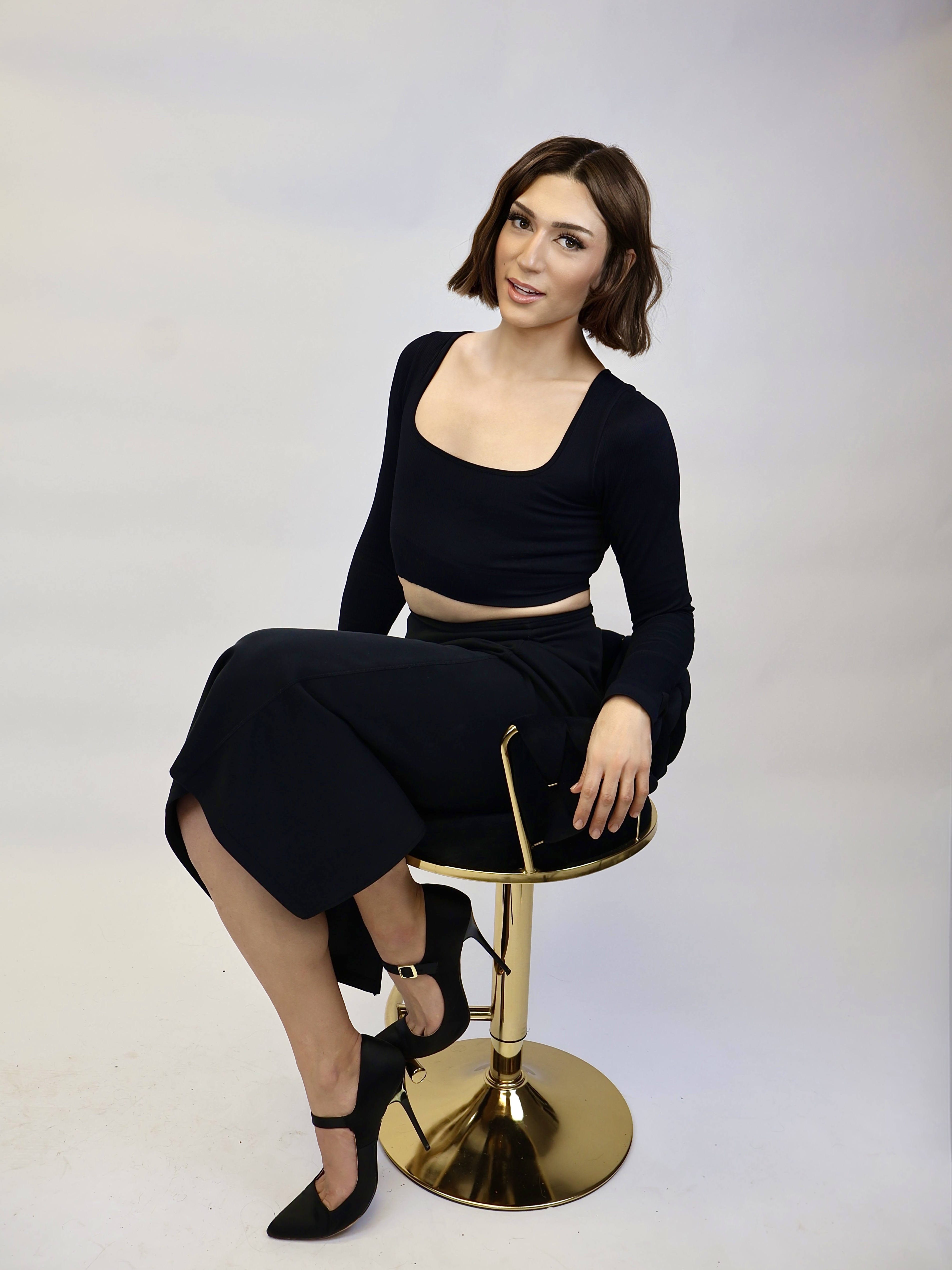
Paris Fashion Week remains one of the most anticipated moments in the global fashion calendar. Behind every runway lies more than a year of planning, hundreds of artists working in coordination, and millions of dollars invested to bring a creative vision to life.
But beneath the spectacle, fashion week is participating in something far older than the industry itself: adornment — one of humanity’s oldest storytelling languages.
Through clothing, hair, and beauty, we communicate identity, power, vulnerability, and belonging. These signals become especially meaningful during moments of cultural tension.
And this season in Paris felt exactly like that kind of moment.
In an era where social, political, and technological pressures seem to pull constantly on the boundaries of human identity, many designers appeared less interested in perfection and more focused on something deeper: what it means to remain human inside a rapidly changing world.
Across the runways, each house presented its own vision of that answer.
Some leaned toward fantasy. Others toward resilience, restraint, rebellion, or raw instinct. But together they formed something larger — a portrait of humanity navigating uncertainty.
And perhaps nowhere was that conversation more visible than in the language of beauty.
Hair, texture, restraint, and imperfection became the emotional cues guiding each story.
At Dior, the runway felt like a gentle act of resistance against cynicism.
Hair was tastefully disheveled, almost fairy-like in its movement. Loose textures and soft shapes created the impression that the models had wandered in from a dream world rather than a styling chair.
In a cultural moment saturated with control and precision, Dior offered something surprisingly radical: joy.
The beauty direction suggested that fantasy still has a place in ready-to-wear — not as escapism, but as a reminder that wonder remains one of humanity’s most essential instincts.

At Saint Laurent, the mood shifted dramatically.
Hair was pulled into sleek buns with razor-sharp side parts, creating silhouettes that felt severe and deliberate. The atmosphere carried a quiet tension — eerie, powerful, almost predatory.
The Saint Laurent woman did not appear fragile.
She looked like a huntress.
The styling echoed the house’s long-standing dialogue with masculine tailoring and female autonomy, a thread that reaches back to the 1920s when women first began adopting traditionally male silhouettes as symbols of independence.
Here, beauty became armor.

At Tom Ford, the runway itself began to feel like a matrix.
Models moved in an unusual cadence — synchronized, yet strangely abrupt, as though something in the rhythm had momentarily glitched. Their movements felt deliberate but unpredictable, making it difficult to anticipate what would happen next.
The stark white room heightened the effect, creating the sensation that the audience was watching scenes cut together inside a dream.
Hair remained sleek and controlled, but the real disruption came from the models’ gaze.
Instead of staring past the audience with the traditional runway distance, they looked directly into it.
The effect was quietly unsettling.
Suddenly, the audience was no longer observing the show — they were inside it.
Tom Ford’s presentation felt like a reflection of modern society itself: cinematic, hyper-stylized, and slightly disorienting, as though reality and simulation were constantly overlapping.

At Schiaparelli, the boundary between woman and animal dissolved.
Known for theatrical glamour, the house introduced something more primal this season. Structured shapes curved and sharpened into forms that hinted at claws, wings, and predatory anatomy.
The beauty direction reinforced the narrative. Hair was sculptural yet restrained, allowing the garments to carry the drama while maintaining an almost primal simplicity. Makeup emphasized bone structure and intensity in the eyes, giving the models a gaze that felt instinctual rather than ornamental.
The effect was not costume, but evolution.
Rather than women adorned with animal symbolism, the runway suggested something stranger — women becoming the animal.
Instinct and elegance merged into a single figure: poised, dangerous, and deeply primal.
In a season where many houses reflected on the fragility of humanity, Schiaparelli reminded us of something older.
Beneath the polish of civilization, the animal remains.

At Balmain, the tone shifted toward restraint.
Hair was executed with precision through sleek braids and controlled silhouettes. The beauty direction was minimal, almost austere.
There was a seriousness to the presentation — a sense of order, discipline, even subtle militaristic references in the sharpness of the silhouettes.
Where other houses explored fantasy or instinct, Balmain leaned into structure.
Sometimes survival requires control.

At Chloé, the energy softened again.
Waves dominated the runway — deep waves, loose waves, romantic waves that framed the face with effortless movement.
The styling echoed the spirit of the 1970s dream girl, but with a modern shift. This was not a delicate muse drifting through the countryside.
She felt more grounded.
Street smart.
Soft, but resilient.
For beauty professionals, the takeaway was unmistakable: texture and natural movement are poised for a major resurgence.

At Stella McCartney, the runway offered something quietly stabilizing.
Hair appeared soft, textured, and largely free from rigid styling direction. The models looked like themselves — only slightly elevated.
There was an earthy elegance to the beauty direction.
In a week filled with spectacle and symbolism, Stella McCartney seemed to distill fashion down to its most human elements.
Texture. Movement. Presence.
Almost as if the brand was saying: keep the beauty, discard the excess.

At Rick Owens, the aesthetic moved toward something almost mythic.
Hair and beauty appeared elemental — raw textures, sculptural silhouettes, and stark contrasts that made the models feel less like individuals and more like figures emerging from a distant future or forgotten civilization.
Owens has long explored the boundary between humanity and monument.
This season felt like another chapter in that exploration.
At Matières Fécales, the conversation turned confrontational.
Hair and beauty were wildly varied — sculptural, exaggerated, and deliberately unsettling. No two models appeared remotely alike.
The styling leaned heavily into ideas of power, decadence, and overindulgence.
It was less about beauty in the traditional sense and more about character building.
If other houses explored humanity through elegance or restraint, Matières Fécales forced the audience to confront its darker impulses.
What emerged from Paris this season was not a single dominant hairstyle or beauty trend.
Instead, the takeaway was philosophical.
Hair is no longer just an accessory to fashion.
It has become a narrative instrument.
Across the week, designers used beauty to establish atmosphere, build character, and guide the emotional experience of the audience.
From Dior’s quiet fantasy to Saint Laurent’s fatal precision…From Tom Ford’s surreal theater to Chloé’s effortless movement…
Each look was less about decoration and more about world-building.
For professionals behind the chair, the lesson is profound.
Clients rarely remember every technical detail of a service.
But they always remember how they felt inside the story you created for them.
And increasingly, the most powerful beauty work begins there.


Comments