.png)
What you missed from New York Fashion Week AW 2026
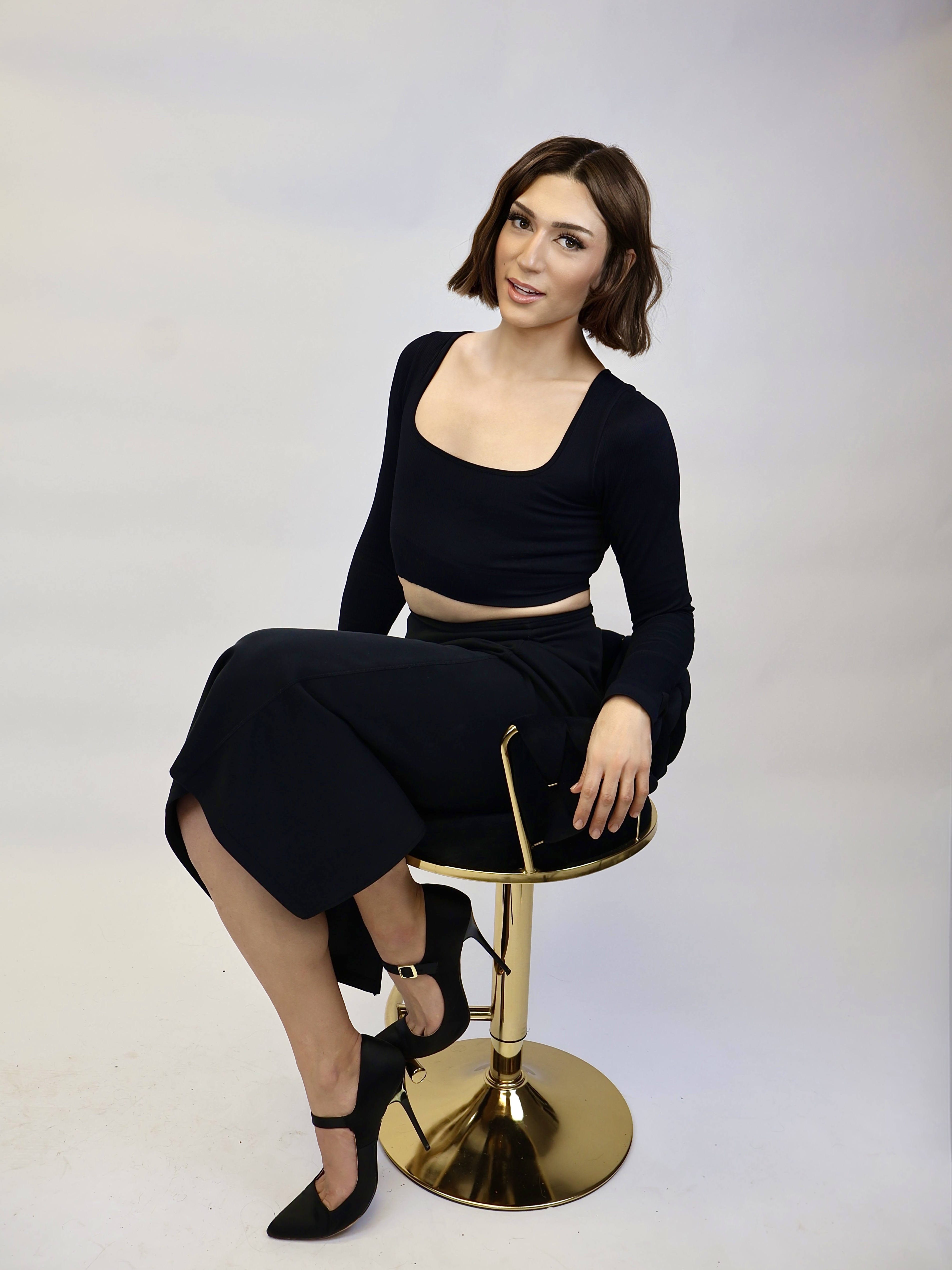
New York this season did not scream. It whispered with precision.
Autumn/Winter 2026 felt less like spectacle and more like recalibration. Designers appeared uninterested in fantasy for fantasy’s sake. Instead, the collections explored identity — softened, distorted, protected, or made hyper-real. And as always, the beauty direction revealed the thesis beneath the fabric.
Below is our study of how hair and beauty translated each house’s intention — not as accessory, but as argument.
Ralph Lauren
Energy: Texture as Luxury
Ralph Lauren explored softness — not fragility, but refinement. The collection relied heavily on tactile contrast: cashmere against wool, structure against drape.
Hair styling mirrored this philosophy. Texture was present, but quiet. Blowouts felt brushed, touchable. Movement was controlled but not stiff. Minimal styling allowed fabric and tailoring to dominate.
In practice, this is restraint. When clothing carries narrative weight, beauty must not compete. It must harmonize.

Coach
Energy: Lived-In American Realism
Coach leaned fully into its consumer. The collection felt street-adjacent, wearable, untheatrical — as though the garments were already broken in by the city itself.
The hair followed suit: lived-in texture, bends instead of curls, irregularity instead of polish. This was not “undone” in a performative way. It felt authentic — the kind of texture formed by subway wind and long days.
For the beauty professional, this is an important distinction. There is a difference between disheveled and lived-in. One is aesthetic; the other is environmental. Coach chose environment.

Michael Kors
Energy: Understated American Ease
Michael Kors continued the language of softness, though with a more metropolitan polish. Waves were gentle, sleek styles were deliberate but unforced.
The beauty direction felt commercially intelligent. It framed the wearer as aspirational yet accessible — the woman who moves from boardroom to evening with seamless continuity.
For salon professionals, this is a reminder: minimal does not mean simple. Soft waves require precision. Sleek requires structural integrity. Effortless is engineered.

Christian Siriano
Energy: Constriction & Commentary
Siriano disrupted the softness narrative.
Hair wrapped around the neck — sculptural, almost binding. Avant-garde in form, it felt less decorative and more declarative. A visual interruption.
One might read it as a social commentary — on restriction, on voice, on the politics of the body. The hair became metaphor. It challenged the expectation that beauty must flatter.
This is where our industry must mature. Beauty can be political. Beauty can provoke. Beauty can question the very systems that consume it.

Marc Jacobs
Energy: The Uncanny Familiar
Marc Jacobs delivered perhaps the most intellectually subversive beauty moment of the week. Models wore wigs that replicated their natural hair — almost perfectly. The illusion was so precise it unsettled. Familiar, but artificial.
In an era of hyper-curated identity, this felt like commentary. What is authentic when replication becomes indistinguishable from reality? The wig — traditionally transformative — here became a mirror.
For professionals, this pushes a powerful idea: transformation does not always require visible change. Sometimes distortion of perception is the statement.

7 For All Mankind
Energy: Cool Girl Revival
A nostalgic nod to the “cool girl” archetype — one could sense references reminiscent of early 2000s cultural icons and television like Gossip Girl.
Hair felt party-adjacent: effortless volume, slightly imperfect finish, a suggestion of last night’s eyeliner still smudged. The energy was social, youthful, knowing.
The beauty complemented the denim-forward silhouettes by reinforcing cultural memory. Not costume — but coded familiarity.

Calvin Klein
Energy: Sculptural Minimalism
Calvin Klein returned to its discipline: clean lines, architectural softness.
Hair was minimal but sculpted. Smooth, controlled shapes that respected the geometry of the garments. No excessive texture, no romanticism.
This is the art of subtraction. When form leads, beauty must follow structure.

The Larger Observation
If we step back, a pattern emerges:
Softness dominated.
Minimalism prevailed.
Texture was controlled.
Illusion and commentary appeared selectively, strategically.
The maximalism of previous seasons seems to be yielding to something more introspective. Beauty this season did not scream for virality. It supported silhouette, narrative, and ideology.
For the beauty professional, the lesson is clear:
Trends may cycle, but authorship requires interpretation.
New York A/W 2026 reminded us that beauty is most powerful when it understands the garment — and even more powerful when it dares to question it.


Comments